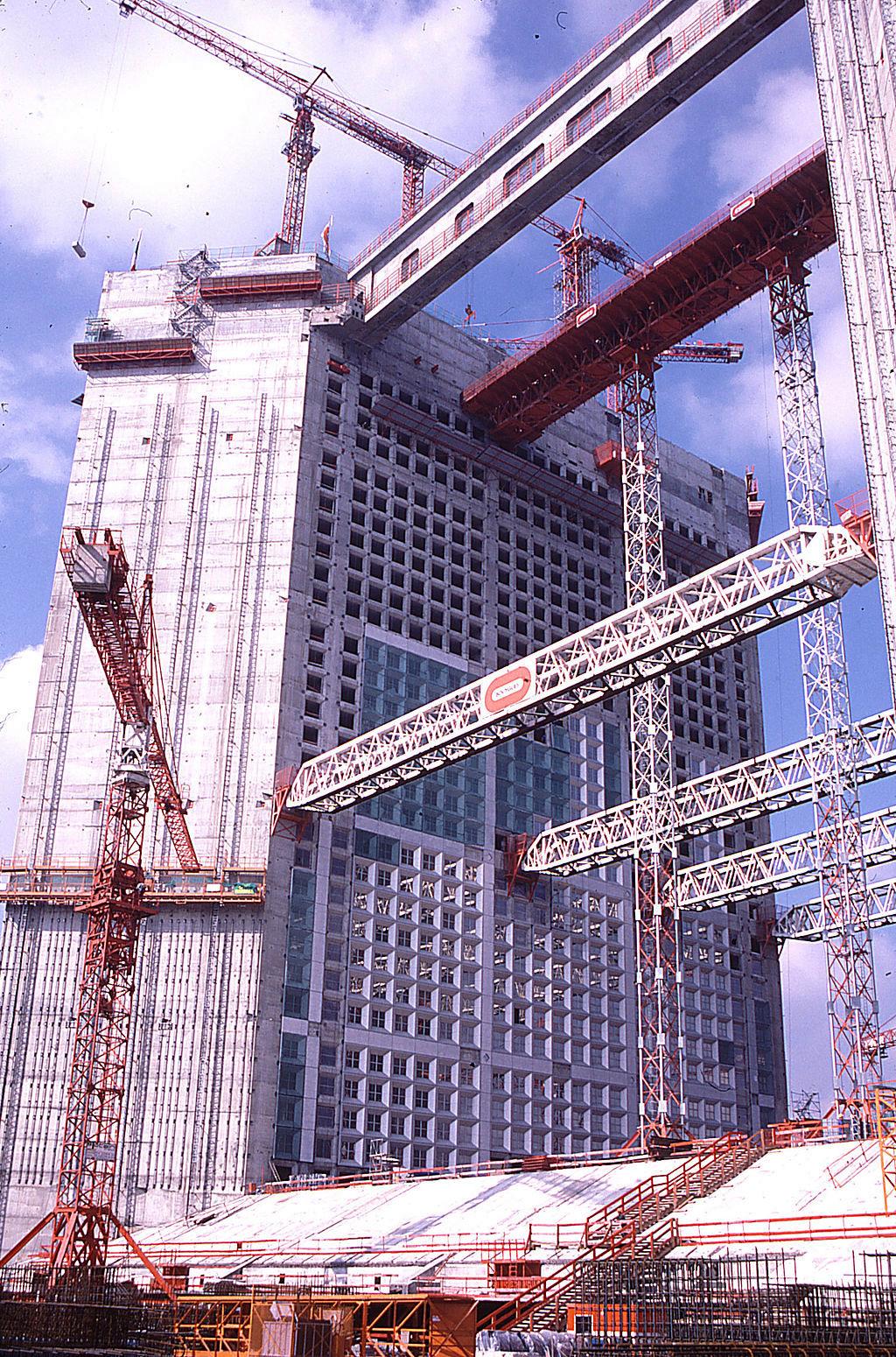
Grande-Arche de la Défense
Robert J. Campo is the Vice President of Sales for the Rock of Ages Quarry Division. Robert started with Rock of Ages in 1979 and has held various positions within the company. In 2004 he was promoted to Vice President of Quarry Sales and will celebrate 37 years in the granite industry with Rock of Ages in August of 2016.
A graduate of Spaulding High School in Barre, Robert earned his Associates in Civil Engineering degree from Vermont Technical College in 1979. He is the father of one adult son and lives with his wife, Michele in Barre, Vermont.
Grande-Arche de la Défense - A bit of History
In the midst of the skyscrapers bordering the Historical Axis in La Défense, a strong unifying symbol was needed, one on a grander scale. Once elected President, François Mitterrand announced that La Défense needed a monumental structure which would represent the French state for centuries to come. The project was called “Tête Défense” (Head Défense) and was part of the so-called “Grands Travaux” (the ‘Great Works’), which involved the construction of a series of impressive architectural projects such as the Louvre Pyramid and the new Bastille opera house. Like the Eiffel Tower at the time of its inauguration, the controversial Grande Arche was not welcomed by everyone. The President was often compared to Louis XIV, the Egyptian Pharaohs or even “dieu” (god) by the media for his zeal for building long-lasting and imposing landmarks throughout the French capital. But for Mitterrand, the timing was once again historic: for plans were being made for the huge celebrations of the bicentenary of the French Revolution to take place in 1989. The French president launched a great national design competition in 1982 and hundreds of proposals for the Head Défense were studied. Amongst them, that of Danish architect Johan-Otto Von Spreckelsen (1929-1987) was chosen. It featured an open cube to look like a window open to the world with and gazing towards the future. The architect described his project as: “a modern Arc de Triomphe, erected to the glory of the triumph of humanity; a symbol of hope that in the future people may meet freely”.